A Practical Guide to Sourcing Garlic, Vegetable Powders and Seasonings for Food Businesses
By Vistara Global Trade · · 4 min read
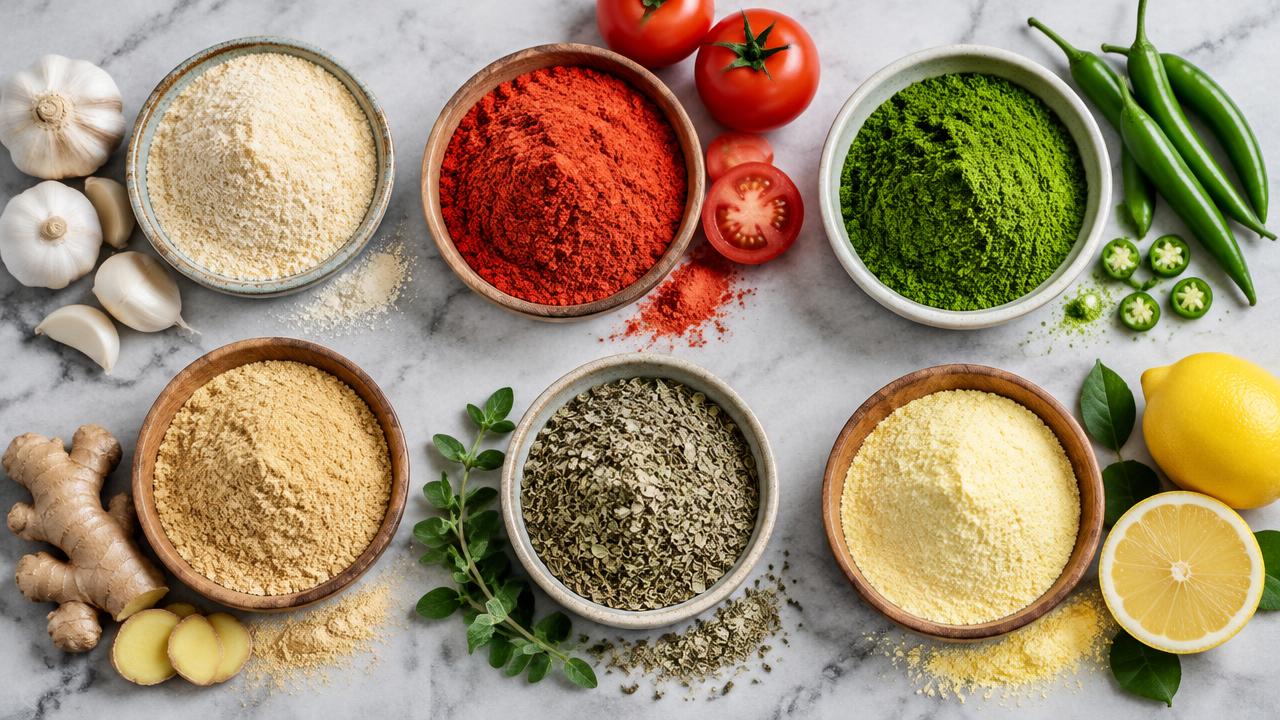
Many food businesses source more than one dry ingredient at a time. A seasoning manufacturer might need garlic powder, tomato powder and green chili powder for the same product line, while a distributor may want to offer customers a broader range of spices and herbs. This guide explains how to organise a multi-ingredient enquiry, communicate your requirements, compare supplied specifications and discuss packaging with an Indian supplier.
Understanding the ingredients
Garlic flakes, cloves, granules and powder
Like onion, garlic is offered in several forms. Flakes and cloves are the least processed and keep a recognisable appearance. Granules come in mesh ranges such as 8–16, 16–24, 24–40 and 40–80, offering texture and good flow. Powder is finely milled for even blending in seasonings, sauces and snack coatings.
Green chili powder
Made from dried green chilies, this powder adds heat with a fresher, greener character than red chili. It is used in snack seasonings, chutneys and spice pastes.
Tomato powder
Tomato powder brings colour and tangy flavour in dry form. It is common in instant soups, sauces, snack seasonings and ready-to-cook mixes.
Lemon powder
Lemon powder provides citrus tang where fresh juice is impractical, such as in dry seasonings, beverage premixes and marinades.
Ginger powder
Ginger powder offers a warm, pungent flavour used in curry blends, bakery products, teas and sauces.
Tamarind and amchur powders
Both are souring ingredients. Tamarind powder gives a sour, fruity note familiar in chutneys and South Indian dishes, while amchur, or dry mango powder, adds fruity sourness to chaat masala, snack seasonings and marinades.
Oregano
Dried oregano is an aromatic herb that is a staple of pizza and pasta seasonings and herb blends.
Organising a multi-ingredient enquiry
A clear, structured enquiry helps the supplier respond accurately. A simple approach is to prepare a short list with one line per ingredient:
- Product name and form (for example, garlic granules, 24–40 mesh).
- Estimated quantity per order and expected frequency.
- Preferred packing size.
- Application, such as snack seasoning or soup base.
- Any specifications your quality team requires.
Add your company name, destination country and the name of the person handling the enquiry. Sending this as one organised message is far more efficient than several separate requests.
Communicating your requirements clearly
The more context you give, the better the supplier can help. Explain what you are making and why a particular form or particle size matters. If you are replacing an existing ingredient, describe what you use today and what you would like to keep or improve. If you are flexible on some points, say so; flexibility can open up options.
Practical example: a company producing a tomato and herb pasta seasoning might list tomato powder, garlic powder, onion powder and oregano together, note that the blend is packed in retail sachets, and ask for packing sizes that suit their weekly production.
Comparing supplied specifications
When you receive product information, compare it carefully against your requirements. A few guidelines help:
- Compare like with like. Make sure two offers refer to the same form, variety and particle size before comparing them.
- Rely on confirmed information. Treat values as confirmed only when the supplier has provided them for that specific product.
- Ask about gaps. If a parameter you need is not listed, ask whether it can be provided rather than assuming.
- Test samples. Where possible, evaluate samples in your own process before committing to larger quantities.
Discussing packaging
Packing sizes differ between ingredients. As an example from a current product list, garlic powder may be packed in 25 Kgs, tomato, tamarind and lemon powders in 20/25 Kgs, and oregano in 12 Kgs because it is a light, leafy herb. When discussing packaging, consider:
- How the size fits your storage space and production rate.
- Handling practicalities in your warehouse.
- Whether you need a packing size that differs from the published list.
Raise packaging questions early, as they can influence both quotations and logistics.
Building a reliable sourcing relationship
Successful sourcing is rarely a single transaction. Clear communication, honest answers about what can and cannot be supplied, and consistent follow-through form the basis of long-term relationships. Keep records of agreed specifications and packing, share feedback after deliveries, and let your supplier know early about changes in your requirements.
Conclusion
Sourcing garlic, vegetable powders and seasonings is simpler when you organise your list, explain your application, compare confirmed specifications carefully and discuss packaging openly. Taking this structured approach saves time for both buyer and supplier.
Vistara Global Trade lists garlic flakes and cloves, garlic powder and granules, green chili, tomato and lemon powders, and tamarind, amchur and ginger powders along with oregano. View the full catalogue or send us your ingredient list to start the conversation.